
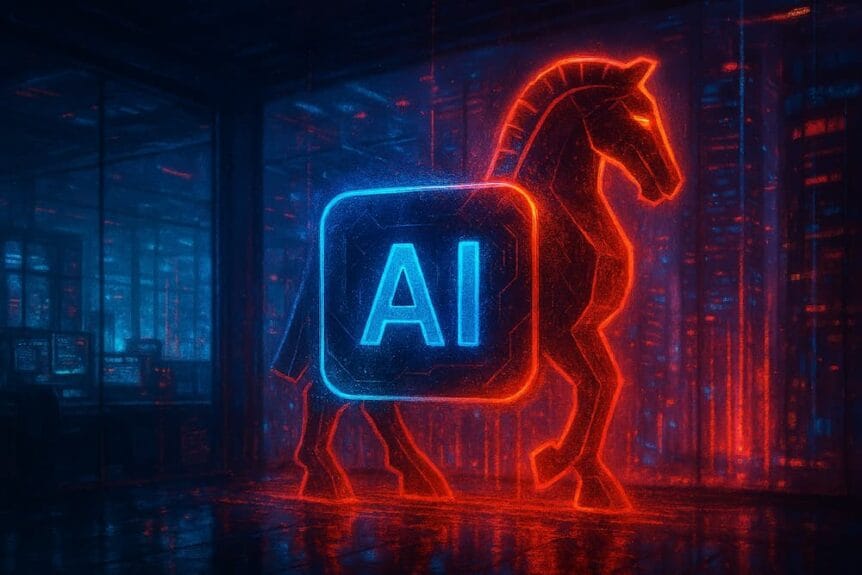
The artificial intelligence gold rush has brought incredible tools to our fingertips, streamlining everything from customer service to content creation. Unfortunately, this technological boom has also paved a golden highway for cybercriminals. As enthusiasm for AI grows, so does the sophistication of digital threats. Recent data paints a concerning picture: phishing reports have skyrocketed over 450%, and AI-enabled scams have surged over 400% over the last year alone.
Criminals are opportunists by nature, and right now, nothing generates more trust and interest than brands like OpenAI and ChatGPT. By exploiting this trust, scammers are flooding digital marketplaces with fraudulent applications. These aren’t just one or two stray programs; we are seeing thousands of coordinated advertisements promoting these fakes, reaching millions of users across the globe. While they masquerade as productivity boosters or creative tools, their true purpose ranges from annoying ad spam to sophisticated surveillance. To keep your business data safe, you need to understand exactly what you are up against.
Understanding the Three Types of Fake AI Apps
Security researchers have categorized these threats into three distinct levels. Understanding the difference can help you determine whether an employee has installed a minor nuisance or a critical security vulnerability.
1. Harmless Wrappers: Minor Risks with Privacy Concerns
The most common and least damaging category is known as the “wrapper.” These applications function exactly as they sound; they wrap a generic interface around a legitimate AI service’s API. When a user downloads one of these, they are often just connecting to the real ChatGPT or a similar engine, but they are doing so through a third-party gatekeeper.
Developers of these apps often add custom themes or extra buttons to justify their existence, but they usually monetize through advertisements. While these aren’t typically malicious in the traditional sense, they introduce unnecessary risks. You are funneling your prompts and data through an unknown developer’s software which creates privacy concerns. For a business, using a wrapper instead of the official app adds an unauthorized middleman to your data flow, which is rarely a good idea for compliance or security.
2. Adware Impersonators: Revenue-Driven Deception
Moving up the threat ladder, we find adware impersonators. These apps exploit the popularity of AI terms solely to generate revenue, often without providing any of the promised functionality. A user might download what looks like an advanced image generator, only to find a hollow shell that does nothing but display aggressive, unskippable commercials.
A prime example of this was the package discovered by security firms labeled as com.openai.dalle3umagic. It promised the power of the DALL-E image generator but delivered nothing but ads. For a business device, the consequences are performance degradation, battery drain, and the harvesting of user usage data that is sold to advertising networks. It turns a productivity tool into a productivity sinkhole.
3. Weaponized AI Counterfeits: Critical Security Threats
The most dangerous tier involves weaponized counterfeits. These are sophisticated pieces of malware disguised as trending AI tools. Attackers often use spoofed security certificates and complex, obfuscated code to trick mobile operating systems into trusting them.
One notorious example includes malicious clones of communication tools like WhatsApp Plus. Once installed, these apps don’t just show ads; they go for the jugular. They are capable of stealing contact lists, intercepting SMS messages to grab two-factor authentication codes, and harvesting login credentials. The stolen data is then quietly transmitted to criminal networks via cloud storage systems. Beyond just data theft, these apps can include ransomware components or tools to facilitate deepfake scams, posing a direct threat to your company’s financial assets.
How Cybercriminals Distribute Fake AI Apps
You might wonder how these malicious apps find their way onto so many devices. The answer lies in aggressive, well-funded distribution strategies.
Social Media and Malicious Advertising Campaigns
Cybercriminals have weaponized social media advertising. They frequently take over legitimate Facebook pages or create convincing fake profiles that mimic major AI brands. Once established, they utilize Meta’s sponsored ad system to push these fake tools to millions of distinct timelines.
These aren’t amateur efforts; the ads feature professional graphics and AI-generated copy that make them appear entirely credible. While they target users globally, there has been a specific focus on users in North America and Europe. Even professional networks like LinkedIn are not immune, as attackers use these platforms to target business professionals looking for the latest enterprise tools.
Clone Websites and App Store Manipulation
Beyond social media, criminals create entire ecosystems of deception. They build sophisticated clone websites that look nearly identical to official AI platforms. These sites are designed to trick search algorithms and capture users looking for terms like “Sora 2 AI Video Generator” or other slight variations of popular products.
Even official app stores can be temporarily compromised. By manipulating listing details and spoofing verification badges, malware authors can sometimes sneak their applications past initial security screenings. Although Google and Apple are quick to remove them once identified, thousands of users may have already downloaded the malicious software by the time the takedown occurs.
Real-World Consequences for Businesses
The installation of a single fake AI app on a company-connected device can trigger a domino effect of disaster. The immediate risk is a data breach; if an app scrapes contact lists or intercepts messages, client confidentiality is instantly compromised.
Financial loss is another major concern. This can happen through unauthorized transactions initiated by the malware or, in worse scenarios, ransom payments. We have seen instances where fake installers deploy ransomware variants like CyberLock, locking users out of their own systems until payment is made. Furthermore, if employee credentials are stolen, attackers can pivot from a mobile device to your central corporate network. Beyond the technical damage, the legal and reputational fallout from a privacy violation can haunt a business for years.
How to Identify Fake AI Apps Before Installation
Prevention is far cheaper than remediation. You and your team can spot most of these fakes by scrutinizing the details before hitting the download button.
Verify Developer Credentials and Official Sources
Always look at the publisher’s name. Legitimate apps come from their official companies; for example, ChatGPT is published by OpenAI. Fake apps often try to trick the eye with subtle misspellings, such as “Chat GTP” or “OpenAl” (with a lowercase ‘L’ instead of an ‘i’). If you are unsure, navigate to the vendor’s official website and click the link to the app store from there.
Analyze App Store Listings and Permissions
Take a close look at the app description. Poor grammar, awkward phrasing, or inconsistent branding are major red flags. Furthermore, check the permissions. A simple chatbot should not require access to your entire contact list, file system, or camera. If an app asks for access that doesn’t make sense for its function, do not install it. Also, be wary of pricing; many scams offer a “free trial” that converts into an exorbitant weekly subscription fee.
Evaluate User Reviews and Ratings Critically
User reviews can be a goldmine of information, but you must read them critically. Scammers often use AI to generate thousands of five-star reviews to boost their ranking. Look for the one-star reviews; that is where you will find the truth. Recurring complaints about unexpected credit card charges, inability to close ads, or suspicious phone behavior are clear warnings to stay away.
Essential Protection Strategies for Businesses
To secure your business against this wave of digital fraud, you need to implement a combination of strict policies and technical safeguards.
- Establish Strict Download Policies: Mandate that employees only download applications from official storefronts like Google Play or the Apple App Store. Explicitly prohibit installing software via links found in social media ads or text messages.
- Implement Technical Security Measures: Deploy mobile security software that uses behavioral analysis to catch threats that traditional antivirus might miss. Ensure every business account is protected by multi-factor authentication (MFA) to prevent access even if a password is stolen.
- Maintain System Hygiene: rigorous patch management is vital. Keep all operating systems and applications fully updated to close known security loopholes.
- Limit App Permissions: Audit company devices to ensure apps only have the permissions they absolutely need. If a flashlight app wants access to your location, remove it immediately.
- Monitor Device Behavior: Train staff to report unusual device activity, such as rapid battery drain, overheating, or random pop-ups, which are often the first signs of a background infection.
What to Do If You’ve Installed a Fake AI App
If you suspect a fake app has breached a device, immediate action is required. First, uninstall the application. On Android and iOS, this usually involves a long press on the icon and selecting remove, but you may need to dig into the settings menu to ensure it is completely gone.
Once removed, run a full scan using a reputable malware detection tool. Some advanced malware includes persistence mechanisms that try to reinstall themselves, so a single scan might not be enough. If the device behaves erratically even after scanning, a full factory reset may be the only safe option. Immediately following this, change the passwords for any accounts accessed on that device, paying special attention to banking and email credentials. Notify your IT department or managed service provider right away so they can monitor for broader network infiltration.
Employee Education and Awareness
Software solutions are critical, but your “human firewall” is just as important. Regular training sessions are necessary to help staff recognize the signs of AI-enabled phishing. They need to know that a request from the CEO via WhatsApp might actually be a deepfake or a sophisticated bot.
Encourage a culture where verification is standard procedure. If an employee receives an urgent request to download a new “productivity tool,” they should feel comfortable verifying that request through official channels. Teach them to listen for the unnatural pauses or tonal shifts that often accompany voice cloning scams. Security awareness is not a one-time seminar; it is an ongoing conversation.
The Future of AI App Security
As we look further into 2025, the tactics used by cybercriminals will only become more streamlined. We are already seeing “scam assembly lines” where AI is used to generate the code, the graphics, and the marketing for fake apps in minutes. Synthetic identities and fake product ecosystems will make it increasingly difficult to distinguish real innovation from criminal fabrication.
However, the defense is evolving too. Security vendors are utilizing AI to detect these threats faster than ever. Yet, technology cannot replace vigilance. The partnership between robust security software and an educated, skeptical user base remains the strongest defense.
Protecting Your Business in the AI Era
Navigating the world of artificial intelligence offers massive rewards for businesses, but it requires a defensive mindset. By verifying sources, using comprehensive security tools, and fostering a culture of awareness, you can utilize these powerful tools without falling victim to the traps set by malicious actors.
If you are concerned about the security of your mobile fleet or want to audit your current application policies, now is the time to act. Don’t wait for a breach to discover a vulnerability. Contact I.T. Solutions of South Florida today, and let us help you build a resilient defense for the future.