
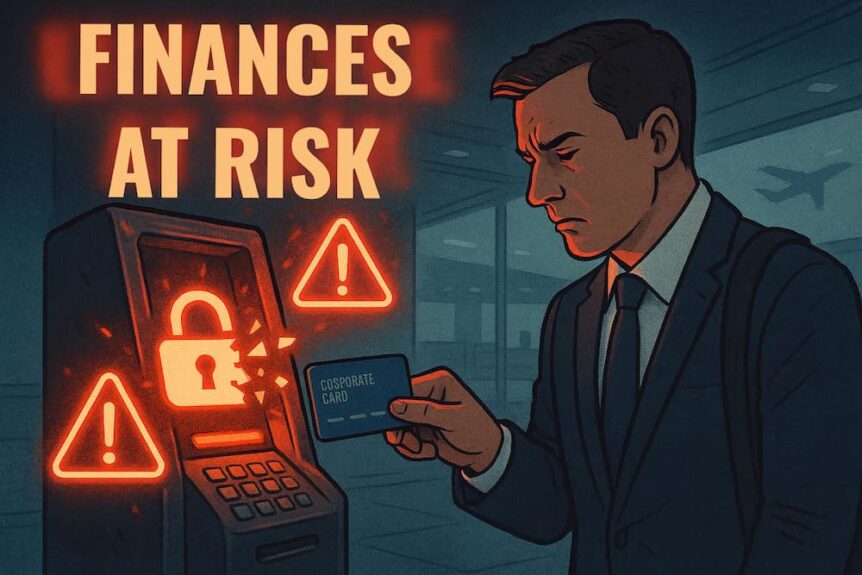
When you think of data security, you likely picture firewalls, antivirus software, and complex passwords. However, one of the most persistent threats to your company’s financial health operates in the physical world just as often as it does in the digital one. Card skimming is a method where thieves capture cardholder data using unauthorized devices installed on payment terminals. For a business owner, this is not just a consumer issue; it is an operational risk that affects your bottom line, your corporate credit lines, and the financial well-being of your workforce.
The scale of this problem is difficult to ignore. Recent data indicates that skimming generates annual losses exceeding $1 billion for financial institutions and consumers across the United States. The growth of this crime has been explosive, with reported skimming attacks surging by 368% in 2022 and climbing another 98% in 2023. For a business, the stakes are high. If a corporate card is compromised, it can disrupt travel, freeze critical purchasing capabilities, and create accounting nightmares. Furthermore, when employees fall victim to these schemes—particularly regarding their payroll or benefits cards—the resulting financial stress often bleeds into the workplace, affecting productivity and morale.
Evolution is constant in the world of cybercrime. What began years ago as simple devices reading magnetic stripes has morphed into a sophisticated industry. Criminals now utilize wireless technology, microscopic cameras, and deep-insert mechanisms that are nearly impossible to detect with the naked eye. Understanding these mechanics is the first step in fortifying your business against them.
How Card Skimming Works
Criminals employ a toolkit designed to steal payment data without the user ever realizing a crime has occurred. The objective is always the same: capture the information stored on the card and, simultaneously, record the PIN or zip code entered by the user. This dual-data theft allows fraudsters to create clone cards or access bank accounts directly.
Physical Skimming Devices
The most recognizable form of this fraud involves card-reader overlays. These are plastic casings manufactured to fit perfectly over legitimate card slots at ATMs, gas station pumps, and point-of-sale systems. While overlays sit on top, more advanced devices known as shimmers function differently. A shimmer is a paper-thin circuit board inserted inside the card reader itself, sandwiched between the chip and the reader to intercept data from modern chip cards. Even more elusive are deep insert skimmers, which reside far back in the machine’s internal mechanism, remaining virtually invisible to the average user.
To complete the theft, criminals need your PIN. They often achieve this by installing pinhole cameras disguised as brochure holders or safety mirrors, positioned to look down at the keypad. Alternatively, they may place a keypad overlay on top of the real buttons to record keystrokes electronically. In the past, thieves had to return to the scene to retrieve these devices, but modern iterations are Bluetooth-enabled. This allows criminals to sit in a car nearby and wirelessly download the stolen data implies they can harvest information for weeks without touching the machine again.
Digital Skimming and Online Threats
As businesses pivot to online transactions, criminals have followed. Digital skimming, often referred to as E-skimming or Magecart attacks, involves injecting malicious code into e-commerce payment pages. When a customer or purchasing manager enters card details on a compromised website, the script copies that data and sends it to the attacker in real-time. Following these thefts, businesses might notice “card testing” on their accounts. This occurs when fraudsters run small, unauthorized charges—often for pennies—to verify that the stolen card numbers are active before moving on to larger fraudulent purchases.
Targeted Attacks on Benefits Cards
A specific and growing concern involves Electronic Benefits Transfer (EBT) cards. Since 2021, criminal rings have heavily targeted these cards because they often lack the embedded microchip security found in standard bank cards. This makes the magnetic stripe data on EBT cards easy to clone. For employees who rely on government assistance, the theft of these funds is devastating. These crimes frequently happen at smaller retail locations or convenience stores where security oversight may be less rigorous than at major banks.
High-Risk Locations and Situations
Not all payment terminals carry the same level of risk. The most vulnerable machines are those located in areas with low visibility or minimal supervision. Gas station pumps are a primary target because they are often unattended, allowing criminals the few seconds they need to install a device. Standalone ATMs in convenience stores or outdoor kiosks are similarly risky compared to terminals located inside a bank branch.
For businesses with traveling sales teams or logistics drivers, the risk profile increases. Tourist areas and rest stops are frequent hunting grounds for skimming operations due to the high volume of transient customers. An employee fueling a fleet vehicle at a remote station is statistically more likely to encounter a skimmer than one visiting a local, well-staffed supply store.
Recognizing Compromised Payment Terminals
Training your staff to spot the signs of tampering is a low-cost, high-impact defense strategy. A few seconds of observation can prevent months of financial headaches.
Visual Warning Signs
Employees should be trained to look for anything that seems out of place. A card reader that looks bulkier than usual, or one that is misaligned with the rest of the machine, is a red flag. Mismatched colors involving the plastic casing, traces of glue residue, or pieces of double-sided tape are clear indicators of tampering. Additionally, tiny holes in plastic housing near the keypad could indicate a hidden camera. If a terminal looks different from the identical machine next to it, avoid using it entirely.
Physical Inspection Techniques
Before inserting a card, it is wise to perform a physical check. Gently pulling on the card reader can reveal if an overlay has been attached; legitimate readers are built into the machine and will not move, whereas skimmers may feel loose or detach with light pressure. The same applies to the keypad. If the keys feel unusually thick or spongy, it could be a keypad logger. At gas stations, checking the security tape on the pump panel is essential; if the seal is broken or reads “VOID,” the internal mechanism may have been accessed.
Protection Strategies for Businesses and Employees
Protecting your business requires a multi-layered approach that combines technology with behavioral changes. By implementing the following strategies, you can significantly reduce the surface area for attacks.
- Prioritize Chip and Contactless Payments: Magnetic stripes use static data that is easy to copy. Chip cards generate a unique code for each transaction, making cloned data much harder to use. Contactless methods like Apple Pay or Google Pay are even safer as they transmit tokenized data that is useless to skimmers.
- Use Credit Instead of Debit: For business expenses, corporate credit cards offer robust fraud protection and do not expose direct cash funds from the company bank account. If a debit card must be used, run the transaction as “credit” to avoid entering a PIN.
- Implement Transaction Alerts: configure your business banking settings to send immediate email or text notifications for every transaction. This allows you to catch and stop fraud the moment it happens.
- Shield the Keypad: It is a simple habit, but covering the hand typing the PIN with the other hand renders hidden cameras useless.
- Regular Employee Training: distinct policies regarding where and how company cards should be used can prevent exposure. Encourage staff to use terminals inside a gas station rather than at the pump.
Phishing and Social Engineering Threats
Skimming does not always end at the ATM. Criminals often combine physical data theft with digital deception. once they have the card number, they may need more information to bypass security filters. This leads to phishing campaigns.
Common Phishing Schemes Targeting Cardholders
Employees may receive emails pretending to be from the bank or a government agency, claiming a card has been compromised and requesting verification of details. SMS phishing, or “smishing,” creates a sense of urgency via text message, while voice phishing (vishing) involves automated calls threatening account suspension. These tactics rely on psychological manipulation to panic the victim into revealing PINs or passwords that the skimmer could not capture physically.
Protecting Against Digital Deception
The golden rule for your business communications is verification. Legitimate institutions will never ask for a PIN or password via email or text. If an employee receives a suspicious message regarding a corporate card, they should contact the financial institution directly using the number on the back of the card, not the contact information provided in the message.
Immediate Response: What to Do If Skimming Is Suspected
Time is the enemy when a compromise occurs. The faster your team reacts, the less damage the criminals can inflict.
- Lock the Account: Immediately contact the card issuer to freeze the card. Many business banking apps allow you to do this instantly from a smartphone.
- Audit Recent Activity: Review transaction logs to identify the first fraudulent charge. This helps establish a timeline for the bank’s investigation.
- Notify Internal Teams: Inform your finance department and IT security team. If the compromise involved a specific vendor or location, warn other employees who may have used the same terminal.
- File Official Reports: Submit a report to the local police department to create a paper trail. Additionally, file a complaint with the FBI’s Internet Crime Complaint Center (IC3) at ic3.gov.
- Change Authentication Details: If a PIN was compromised, change it immediately. If the card was linked to online accounts, update those credentials as well.
Building a Culture of Security Awareness
Security is not a product you buy; it is a mindset you cultivate. To truly protect your business, security awareness must be an ongoing conversation rather than a one-time seminar. Regularly update your team on the latest trends in skimming and fraud. Encourage employees to report suspicious terminals or odd transaction attempts without fear of judgment.
Leadership plays a critical role here. When management models secure behaviors—like inspecting terminals and ignoring phishing texts—it sets a standard for the rest of the organization. You might consider appointing security champions within different departments or creating easy-to-access resources like a “Fraud Response Checklist” for your intranet.
Staying Vigilant in an Evolving Threat Landscape
The threat of card skimming is not going away; it is merely changing shape. As physical terminals become more secure with chip technology, criminals shift toward shimmers and online attacks. As we adopt contactless payments, they explore new wireless vulnerabilities. However, the most effective firewall against these threats remains an educated and vigilant human being.
By equipping your employees with the knowledge to spot tampering and the protocols to respond quickly, you build a resilience that technology alone cannot provide. Review your security policies today, encourage your team to inspect before they connect, and keep a close eye on your transaction logs. If you need assistance strengthening your company’s overall cybersecurity posture or training your staff on digital threats, I.T. Solutions of South Florida is here to help.